Ao observar o “Processo de Validação do Gol” de André Silva (o primeiro do São Paulo FC no empate em 2×2 contra o Red Bull Bragantino em Bragança Paulista, pela Rodada 14 do Campeonato Brasileiro), me admirei com o conjunto de situações.
Explico: era um lance ajustado, onde poderia ter um impedimento na construção da jogada. Assim, ao estufar as redes, aconteceu o seguinte:
- O VAR pediu ao árbitro para esperar o reinício da jogada, para verificar se havia impedimento ou não;
- Jogadores de ambas equipes foram reclamar ao árbitro (algo sem sentido, pois nenhum atleta tem condição de dizer se estava fora de jogo ou não, mas parece ser um ritual do futebol brasileiro: fazer um bololô e encher a paciência do juiz, mesmo quando ele tenta conversar com o árbitro de vídeo.
- André Silva se benzeu, ajoelhou em campo e começou uma prece para que fosse gol (uma cena que não é vista na Europa – eu respeito todas as crenças e falaremos em especial sobre religião e futebol numa outra oportunidade).
- A imprensa ficou angustiada (alguns narradores “gritam novamente gol”, de maneira mais convicta, após a confirmação, algo talvez típico do nosso país).
- Os torcedores comemoram, e depois meio “sem-graça”, ansiosamente esperam a decisão do VAR.
Pra quê isso?
Pior ainda: a demora para traçar as linhas, parecendo algo primitivo, com paralelas se encaixando no ombro, no braço, voltando às axilas… além do mais grave: o tempo perdido, quebrando a dinâmica do jogo!
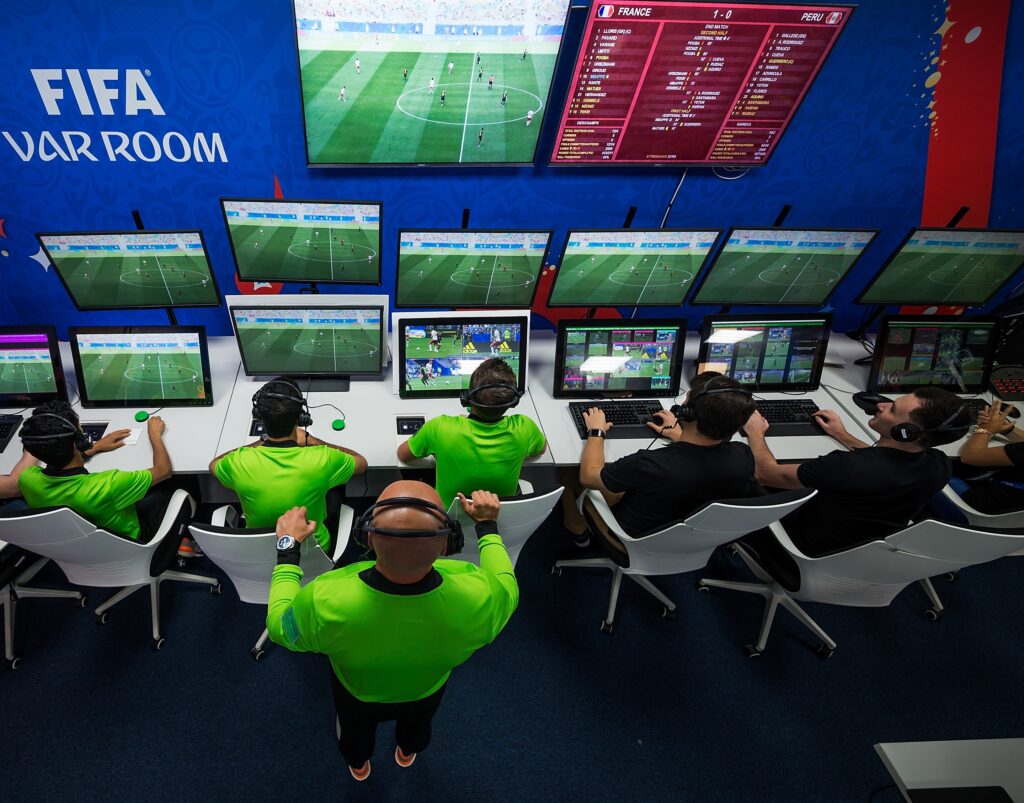
Enquanto a FIFA já evoluiu para uma 3ª versão de tecnologia nas marcações de impedimento, a rica CBF não evoluiu. Do impedimento semi-automático, usado pioneiramente na Copa de 2022 e utilizado por algumas Ligas Européias (que nós nem usamos ainda no Brasileirão), já pulou para o impedimento por Inteligência Artificial, visto no Mundial de Clubes 2025.
Compare: o mesmo gol de André Silva, com demora de validação, se ocorrido em um jogo por torneio FIFA, não se esperaria nada para o reinício da partida. Seria somente o tempo do time bragantino pegar a bola e colocá-la no meio de campo, ou do time paulistano se posicionar em seu campo. Sem bololô de atletas, sem rezas dos jogadores, sem angústia de imprensa e torcedores, e sem polêmica de linhas bem ou mal traçadas.
Nosso VAR é analógico, sem ter passado para o digital e ainda distante da IA, lamentavelmente.
IN ENGLISH –
Observing the “Goal Validation Process” for André Silva’s goal (São Paulo FC’s first in their 2-2 draw against Red Bull Bragantino in Bragança Paulista, during Brasileirão Round 14), I was struck by the combination of situations.
Let me explain: it was a tight call, with a potential offside during the build-up. So, after the ball hit the net, the following happened:
- The VAR asked the referee to delay the restart of play to check for offside.
- Players from both teams complained to the referee (which makes no sense, as no athlete is in a position to determine if it was offside or not, but it seems to be a ritual in Brazilian football: create a commotion and annoy the referee, even when he’s trying to communicate with the video assistant referee).
- André Silva crossed himself, knelt on the field, and began to pray for the goal to be confirmed (a scene not typically seen in Europe – I respect all beliefs, and we’ll talk specifically about religion and football another time).
- The media was anxious (some commentators “shouted goal again” more confidently after the confirmation, perhaps typical of our country).
- Fans celebrated, then felt somewhat “awkward,” anxiously awaiting the VAR’s decision.
What’s the point of all this?
Even worse: the delay in drawing the lines, looking primitive, with parallel lines trying to fit on a shoulder, an arm, going back to the armpits… plus the most serious issue: the lost time, breaking the game’s momentum!
While FIFA has already evolved to a 3rd version of offside technology, the wealthy CBF (Brazilian Football Confederation) has not. From semi-automatic offside, pioneered in the 2022 World Cup and used by some European Leagues (which we still don’t use in the Brasileirão), it has already jumped to AI-powered offside, seen in the 2025 Club World Cup.
Compare: André Silva’s same goal, with its validation delay, if it had occurred in a FIFA tournament match, there would be no waiting for the restart of play. It would simply be the time for the Bragantino team to pick up the ball and place it in midfield, or for the São Paulo team to position themselves in their half. No player commotion, no prayers from players, no anxiety from the media and fans, and no controversy over well or poorly drawn lines.
Our VAR is analog, having not even transitioned to digital and still far from AI, regrettably.

 DISCUTINDO CONTEMPORANEIDADES